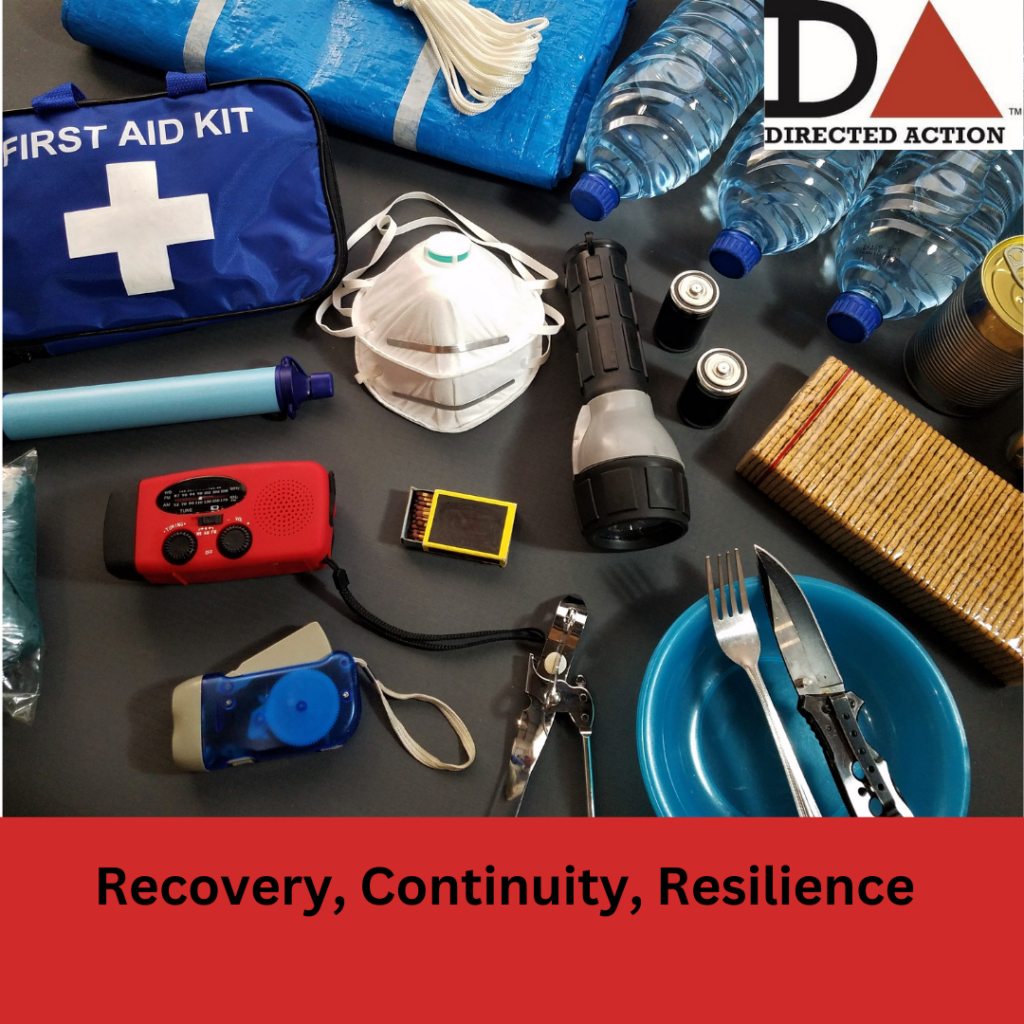
“You don’t have to sit there and try to figure it all out by yourself.”
This powerful statement from Kevin Keane’s recent interview with Julie Clowes, District Director of the SBA, encapsulates a crucial truth for small business owners facing unexpected challenges. The conversation explored how businesses can prepare for disruptions, whether they come from natural disasters, economic downturns, or other unforeseen events.
The Importance of Planning
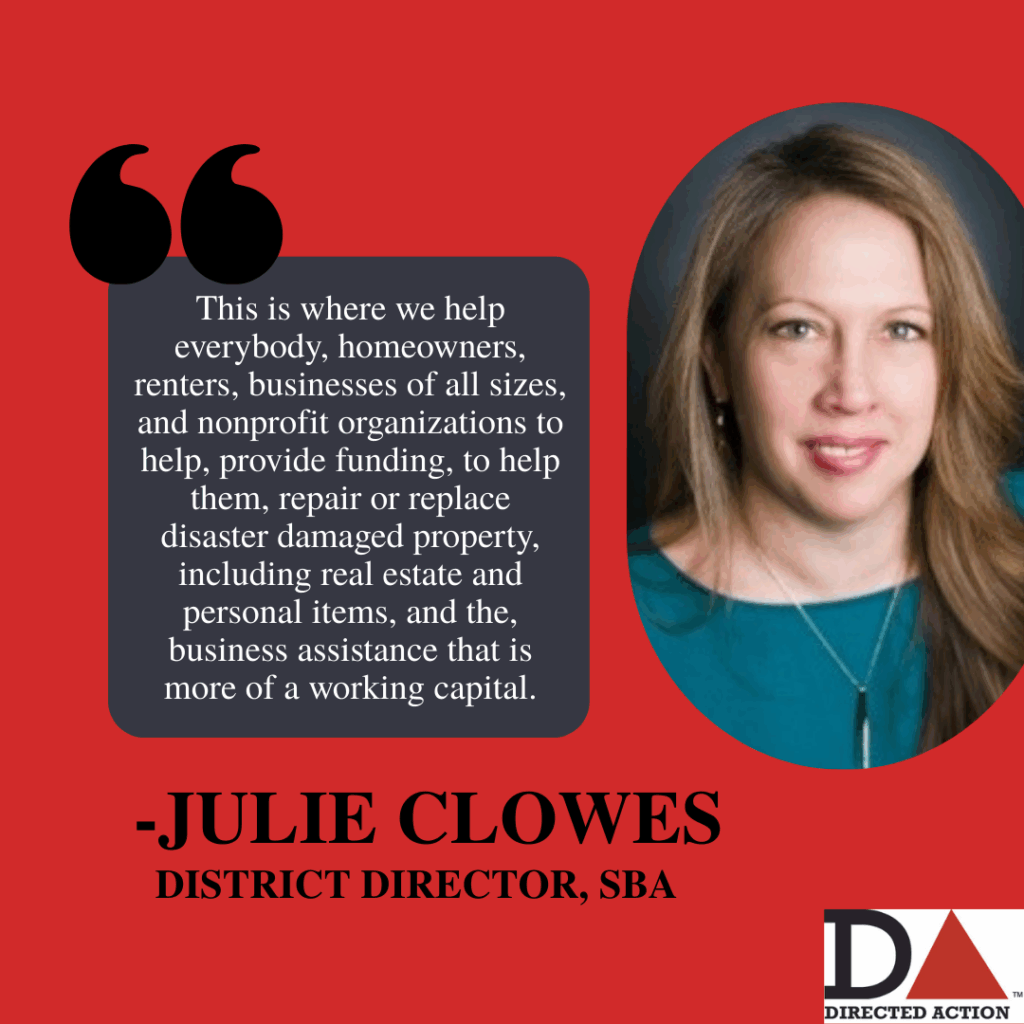
In our discussion, Julie emphasized the need for businesses to develop what she now calls a disruption plan. This goes beyond traditional disaster planning. It’s about anticipating various scenarios—natural disasters, cyber threats, or economic shifts—and understanding how they can impact operations. As Clowes points out, “It behooves us all to take some time and think about what could impact my business.”
She urged business owners to take advantage of calm periods to consider potential risks and formulate plans. This proactive approach can make a significant difference when disaster strikes.
Understanding Different Types of Disruptions
The conversation highlighted that not all disruptions are the same. Clowes shared that certain industries face unique risks. For instance, businesses in areas prone to wildfires must prepare differently than those in urban settings. The key is to assess the specific risks related to your business sector and geographical location. She notes, “Certain industry sectors will have risks in certain categories that maybe other industries or businesses won’t.”
The Blue Sky and Gray Sky Concept
A memorable analogy used during our conversation was the “blue sky, gray sky” concept. Blue sky represents calm times when businesses should plan and prepare, while gray sky refers to periods of uncertainty and crisis. This imagery serves as a powerful reminder that planning during blue sky times can significantly ease the transition into gray sky periods.
Engaging Employees in the Planning Process
One of the most insightful pieces of advice shared was the importance of involving employees in the planning process. Clowes stated, “If you have employees, I think this is actually a great exercise to involve your employees with because they may spot things that you don’t spot.” Engaging employees not only helps identify potential risks but also fosters a culture of preparedness and resilience within the organization.
Financial Considerations: Cash Flow and Resources
A major theme in the interview was the financial aspect of business resilience. Our guest emphasized the need for businesses to understand their cash flow and expenses, especially in the aftermath of a disruption. Questions like “What can I afford?” and “What cash reserves do I have?” are critical for assessing how long a business can withstand a shutdown.
The discussion also touched on the emotional toll of facing financial uncertainty. Many business owners may feel overwhelmed and unsure about their next steps. Clowes reassured listeners that they don’t have to navigate this alone. “There’s really no reason to try to sit there and do it all by yourself,” she said, highlighting the support available through various organizations.
Resources Available for Businesses
Throughout the interview, Clowes shared valuable resources that businesses can utilize to create their disruption plans. For example, the Small Business Administration (SBA) offers templates and tools that simplify the planning process. They encouraged business owners to explore these resources, stating, “There’s lots of templates and lots of questions and things.”
Additionally, our guest mentioned that businesses could benefit from the expertise of advisers who have worked with various businesses. These advisers can help business owners navigate their options and assess the financial impact of different decisions.
The Role of Community and Collaboration
An interesting point raised during the conversation was the role of community support during crises. Our guest observed that many organizations, including churches and local groups, have stepped forward to assist businesses in need. She noted, “We want to look at how it’s impacted your business,” emphasizing the importance of understanding that help is available even for those not directly affected by a disaster.
This collaborative spirit is vital for recovery. As Clowes explained, the network of support has expanded, allowing for better communication and resource sharing among different organizations.
The Emotional Journey of Recovery
Our conversation also touched on the emotional journey business owners face after a disaster. Many are not only dealing with the loss of their business but also personal challenges. As Clowes pointed out, “They might have lost their home, but maybe they also lost their business.” This dual impact can be overwhelming, and it’s essential for business owners to seek support not just for their business but also for their mental well-being.
Expert Advice: Planning for the Future
As the interview wrapped up, our guest offered practical advice for business owners. She stressed the importance of having a plan in place before a disaster occurs. “The businesses that do plan for these disruptions and have a way to try to reopen faster definitely recover a lot faster as well,” they noted. This reinforces the idea that preparation is not just about survival; it’s about thriving in the aftermath of a crisis.
Final Thoughts: A Call to Action
The most impactful takeaway from our conversation is clear: businesses must prioritize planning and preparation to navigate disruptions effectively. By engaging employees, utilizing available resources, and fostering a community spirit, business owners can build resilience against future challenges.
As Clowes aptly summarized, “We’re here for the good times and the bad.” This commitment to support and collaboration is what defines the SBA in terms of their support for small businesses.